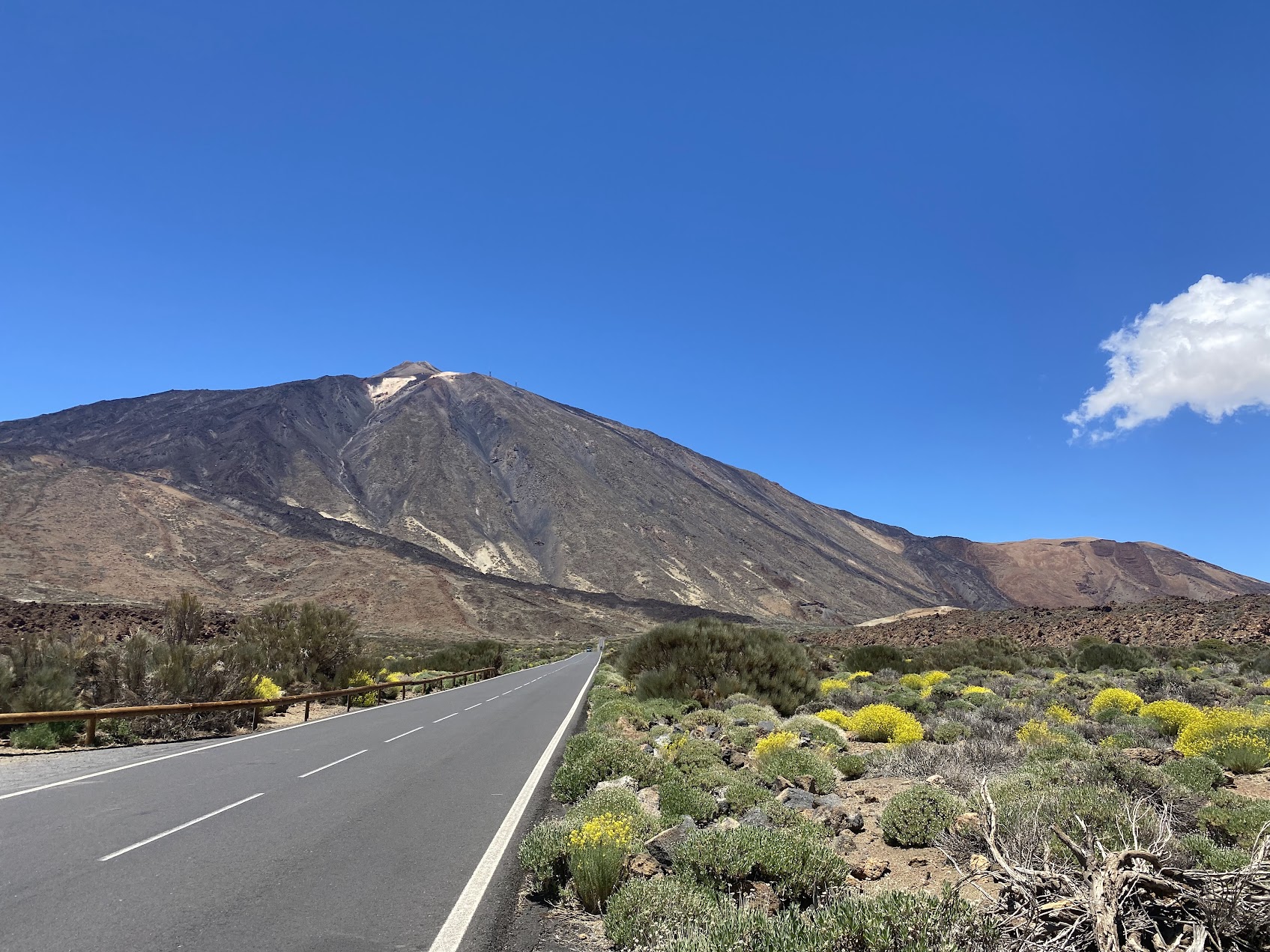
In times of global change and novel ecosystems, assessing the impact of non-native species spread on the diversity of native plant communities has become more relevant than ever. But few have yet to look towards the mountains, where ecosystems are experiencing increasing invasions by non-native plants. This is where Meike Buhaly, who is part of the Institute of Ecology at Leuphana, and colleagues stepped in. They wanted to know if non-native plant species are contributing to biotic homogenisation along roads in mountain regions and how this varies along elevational gradients and across spatial scales. Want to know what they found out? Then read on!
“Homogenisation of mountain ecosystems through non-native species?” No idea about that…
Then let’s start with the background: While humans expand into natural environments, global transportation networks lead non-native species to not only spread throughout the globe at an increasing rate, but also to expand upwards. As this article already gave away, the spread of non-native species increases the risk of homogenisation for plant communities, which means a reduction of diversity between communities. Potential consequences are decreased landscape variability and ecosystem services. For us, this urgently calls for action to conserve diverse communities. Particularly for mountain regions, the long-term effects of homogenisation are poorly understood and there aren’t a lot of studies comparing multiple scales for higher elevation. Luckily for us, Buhaly and colleagues aimed to kick-start filling this research gap with their study.
What you need to know before we dive in: Biotic homogenisationoccurs when two or more spatially distributed ecological communities become increasingly similar which decreases beta-diversity. Biotic differentiation, on the other hand, causes an increase in beta-diversity, which means communities become less similar to each other.
The study design and vegetation surveys in numbers
To determine whether the addition of non-native species leads to homogenisation or differentiation, the researchers addressed local, regional, continental and global scales by looking at the dissimilarity, i.e. beta-diversity, between plant communities along mountain gradients. Why did they specifically look at plants at mountain roads? Because roads represent the transition where non-native species can spread from low to high elevations.
Now, are you ready for some interesting numbers?
- 18 mountainous regions from all continents (except Antarctica) were surveyed for vegetation data, along 46 mountain roads.
- 2012 to 2023 was the timeframe in which the datasets were collected.
- 1 to 4 elevation gradients were selected per region, with each elevation gradient divided into 20 equal sampling sites.
- This added up to 687 sampling sites across all regions in total, in which 2627 native and 563 non-native species of vascular plants were identified.
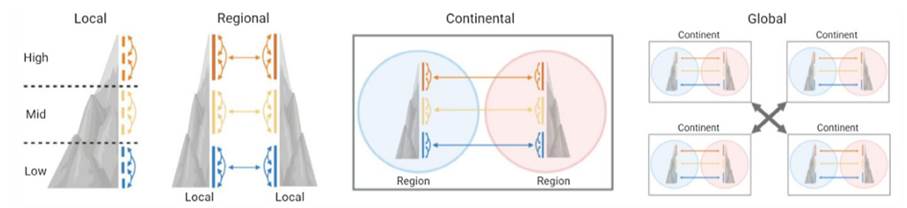
In case you want more details, here is an explanation of the figure: Local scale: Analysis of sites within same elevational band separately for each elevation gradient within each region. Regional scale: Analysis of sites within same elevational band across elevation gradients within each region. Continental scale: Analysis of sites within same elevation band across elevation gradients in same continent. Global scale: Analysis of all sites in same elevation band for all elevation gradients.
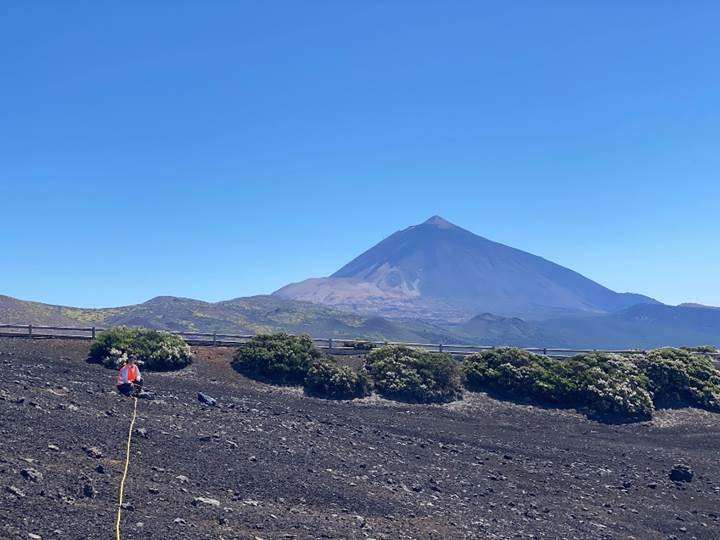
The results we’ve been waiting for: Homogenisation or differentiation, or both?
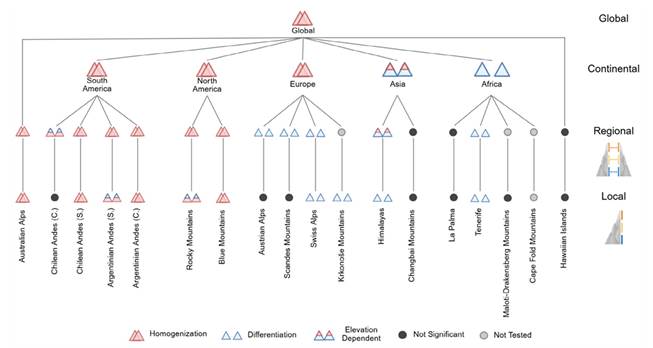
First of all, across all regions, non-native species richness declined with increasing elevation. At the global scale, the researchers found homogenisation of communities by non-native species. From the local to continental scales, however, they found both homogenisation and differentiation.
Looking at different scales matters
As you can see in the figure above, surprisingly, community homogenisation and differentiation were balanced across continents. The researchers also found striking differences at regional and local levels between the American continents, where homogenisation dominated, and Asia, Africa, and Europe, where non-native species led to community differentiation.
These findings suggest that homogenisation through the addition of non-native species may not be as common as originally thought, especially when looking at smaller scales.
A word on elevations
Most of the regions show homogenisation through species invasions at low elevations, where non-native species are most abundant. But the results suggest that as non-native species continue to move upwards, due to climate warming and road networks, high elevation communities may also become increasingly similar in the future.
No single mechanism explains everything
Clearly, the effects of non-native species vary with region, elevation, and scale. Homogenisation and differentiation are driven by interconnected mechanisms such as invasion history, species frequency, environmental filtering, and human land use.
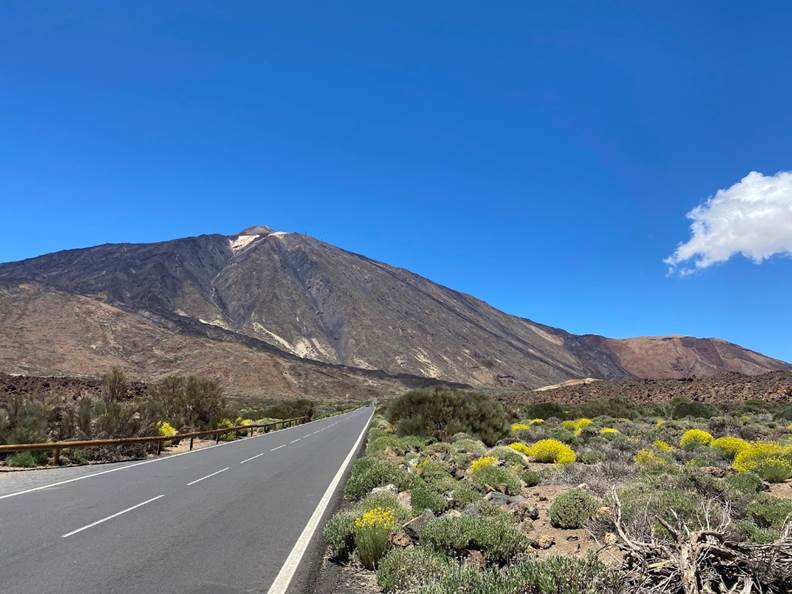
What do we to take away from this?
Most importantly, the addition of non-native species can contribute to homogenisation of roadside plant communities, especially at a global level. This is partly driven by the number of non-native species, but also by their frequency across multiple sites. The observed homogenisation in the study mainly results from the addition of the same non-native species, across regions, not from immediate loss of native species. Homogenisation through the replacement of native species, though not studied here, can also lead to possible risks to ecosystem functions and community resilience of plants.
Remember the plot twist of the study’s findings: There wasn’t only homogenisation, but also differentiation. We must keep in mind that the exact impact of homogenisation, differentiation and the transition between these two stages is not yet well known. Nonetheless, community differentiation through the addition of non-native species may also be beneficial. With the increasing impacts of climate change, non-native species can potentially increase functional resiliency of plant communities. But beware of the risks of the invasion of non-native species!
Our main take-away: Global homogenisation might be a signal that high-elevation plant communities along roadways may become more similar as non-native species continue to spread upwards.
A look into the future
This study provides us with the first global assessment of how non-native plants affect mountain plant community similarity along elevation gradients. In the future we need studies to investigate what mechanisms might drive homogenisation and differentiation by non-native species and what potential consequences for ecosystem function and resilience they have.
To be continued…
You want to learn more about the impact of non-native species on plant communities in mountain regions and the study’s findings? Then read the full article here: https://onlinelibrary.wiley.com/doi/10.1111/geb.70137
If you don’t want to miss any new articles of this blog, then scroll all the way to the end of this site, where you’ll find a subscribtion tool. Subscribe if you’d like to receive email notifications when there’s a new article posted.