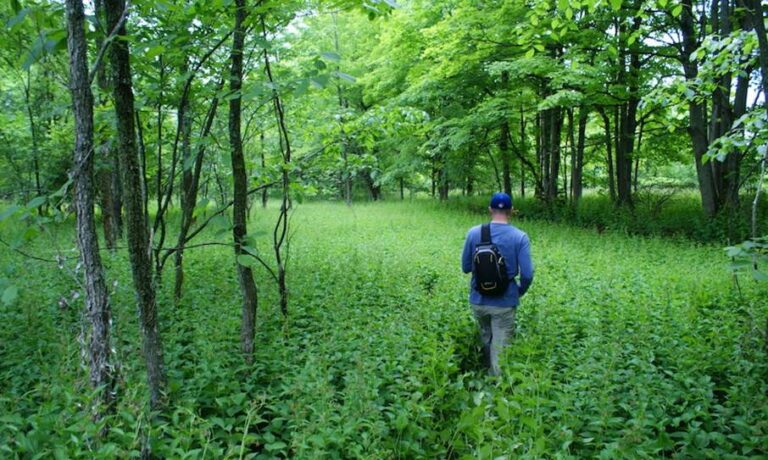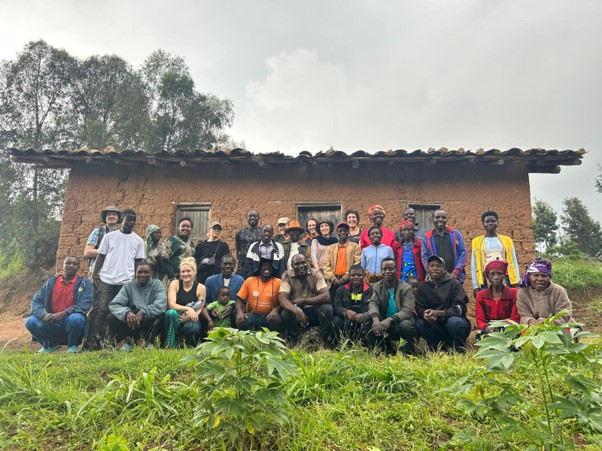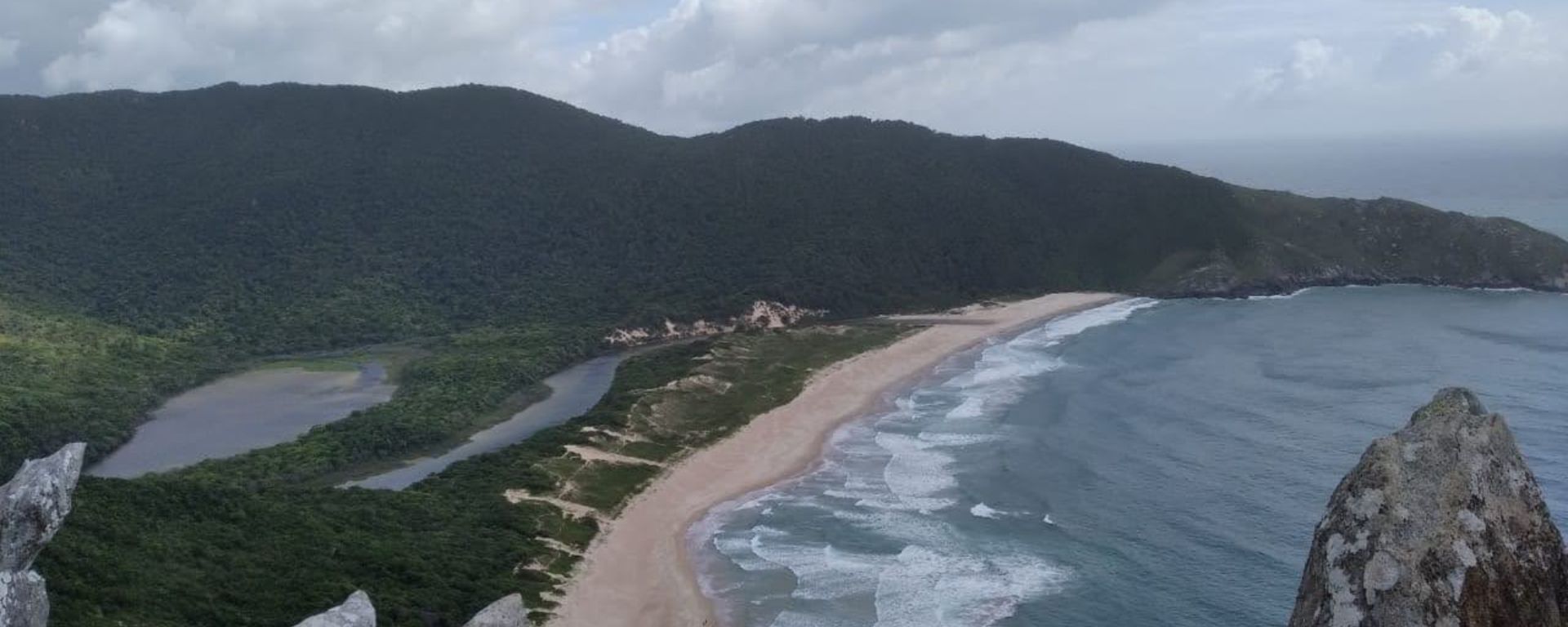
When people think about restoring nature, they usually look at what is happening above the ground. They ask questions like “Are the native plants coming back?” or “How does the landscape look?”. But just beneath the surface of our soils lies a hidden world that people often overlook – the world of roots, fungi and microorganisms that support plant life and the health of ecosystems in a substantial way. Therefore, we also need people asking the questions: “How do we unravel this hidden world in the soil and restore it?” and “What happens below-ground when we remove invasive plants?”. Well, luckily for us and for the endeavours of ecosystem restoration, Della Vecchia and colleagues (2025), led by Dr. Emanuela W. A. Weidlich, research associate at Leuphana’s Institute of Ecology, went digging for answers to exactly these questions on Florianópolis, a beautiful island on the southern coast of Brazil.
The legacy of this hidden world
Biological invasions are one of the main threats to biodiversity worldwide and, if not controlled, invasive, non-native plants could damage the functioning and structure of ecosystems up to a point of no return. That is why the control of invasive species is one of the biggest challenges of ecosystem restoration. However, the removal of these species is usually only done above-ground, while the roots and their microbiota remain in the soil along with a legacy that could hinder successful restoration. Their legacy entails that invasive plants have the ability to alter soil microbiota and nutrients which can stay even after these species are removed – this is called the ‘legacy-effect’. And yet little is known about what happens below-ground after invasive plants are removed.
An excursion into the realm of roots and fungi
Before we come back to the research of Dr. Emanuela W. A. Weidlich and her team, we’ll quickly dig into the soil (only metaphorically speaking of course) and take a closer look at what’s going on there. Under the surface, we’ll discover that root traits are important drivers of ecosystem processes. While root biomass is related to productivity and carbon storage, root length reveals the roots’ ability to reach and take in limited resources like water or nutrients. Zooming in on more nuanced detail, fine roots are moredynamic than thicker roots and can acquire resources directly from the soil or through symbionts like mycorrhizal fungi. This leads us to Ectomycorrhizae (ECMs) which are associations between plant roots and fungi. And not just any association but a close, beneficial partnership. ECM fungi capture nutrients and water from the soil for plants and in exchange receive carbohydrates, which are major sources of energy, from the plants’ photosynthesis. These beneficial below-ground interactions play a key role in plant survival, yet the influence of controlling invasive plants on root dynamics has rarely been assessed.

The invasion of pine trees in the Brazilian Atlantic Forest
Let’s zoom out again of our metaphorical soils and in on the actual soils of the southern coast of Brazil, more specifically the island Florianópolis and its ecosystems. There, invasive pine trees (which are usually from North America) have invaded the sandy coastal vegetation in the Brazilian Atlantic Forest and are gradually replacing the otherwise species-rich and unique coastal plant communities. Furthermore, they are known to have symbiotic ectomycorrhizal fungi that help them establish in their new environment. That is why Dr. Emanuela W. A. Weidlich and her students collected soil cores to find out what effect the control of this invasive tree has on the fine root dynamics of the plant communities – in other words: After the pines are removed, does the underground part of the ecosystem recover as well?
The recipe for ecological research: persistence, creativity and (incredible) ecosystems
Our researchers took advantage of a volunteering programme as well as their own dedication and creative minds to carry out their research. The volunteering programme consists of citizens that have been and still are removing invasive pine trees in a protected area on Florianópolis, enabling the research team to collect 90 soil samples in three types of areas: sites never invaded by pines, sites still invaded by pines and sites where pines had been removed about six years earlier.
The team used handmade equipment like self-built soil cores and turned the house of one of the researchers into an improvised root lab during the COVID-19 lockdown. They then measured fine root biomass, root length and the abundance of ECM in the three areas.
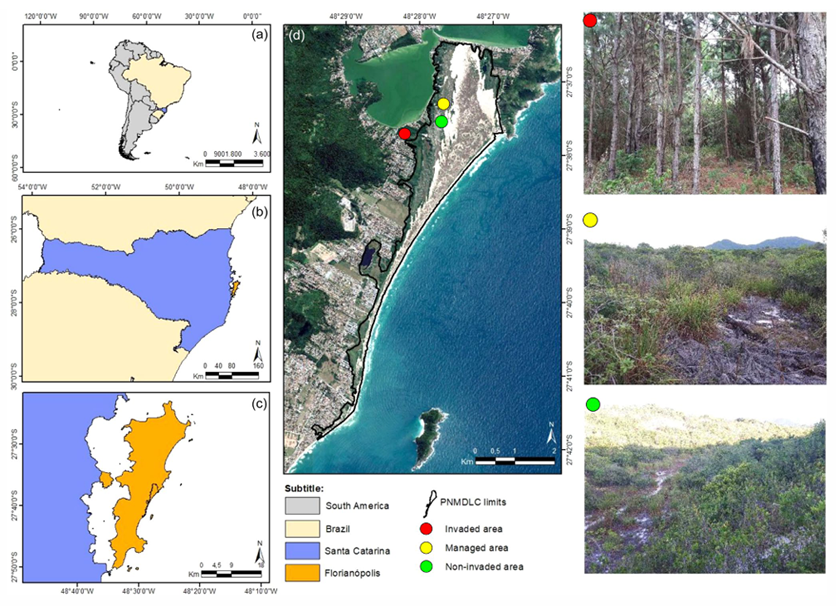
What did the underground world of Florianópolis reveal?
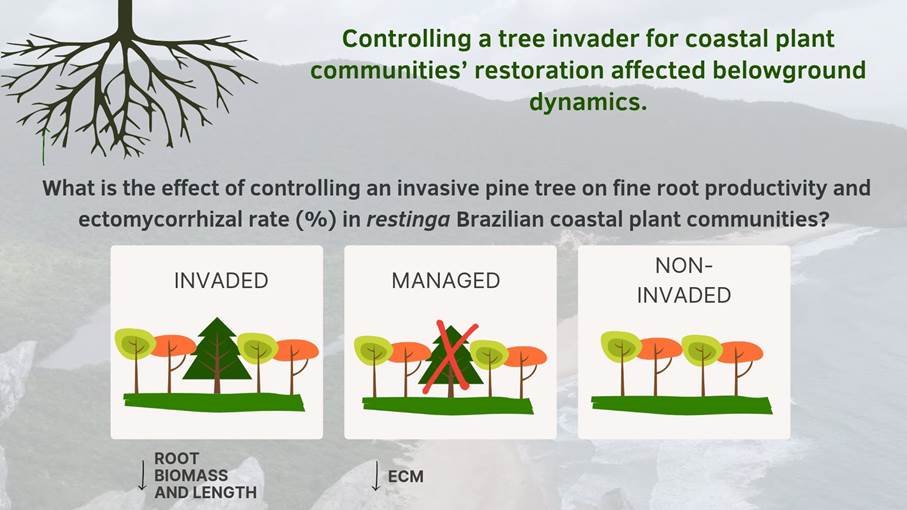
Their results showed that the invaded areas had lower fine roots biomass and fine root length density than the non-invaded area and the area where pine trees have already been removed. These findings suggest that the invasion of the pine trees changes how plants use the soil and alter the structure of the ecosystem below-ground. Explanations for the fewer fine roots in the invaded area reveal that the dominance of pine trees leads to overall thicker roots (as adult pine trees have larger roots) and also to a thick layer of litter on the soil. This layer results in nutrient deficiency, negatively affecting the growth of roots.
Moving on to the more encouraging news: In the restored area, where the pine trees were removed, the amount of fine roots was very similar to the one found in the area that had never been invaded. This means that the control of invasive species can work! In this case, removing invasive species was able to help native vegetation rebuild the ecosystem not only above-ground, but also below-ground.
However, ecosystems are complex and their recovery is not always complete or immediate. The results also showed similar ECM rates in all the three different areas, which indicates that the ECM fungi associated with the invasive pine tree can successfully colonize areas they were introduced to.
What can be learned from this study?
The digging for answers was successful. With these insights, our researchers help to fill an important knowledge gap by showing that roots respond positively to invasive species control. They suggest that native vegetation of the study area is recovering well and the potential legacy effect of the pine tree invasion did not compromise the recovery of the below-ground structure.
Overall, what we can learn from this study is that invasive plants can lead to changes in root structure and hence affect ecosystem functions. Moreover, root dynamics play an important role in the process of regeneration and restoration during invasion control and these legacy-effects should be monitored long-term. The biggest lesson, however, might be that meaningful ecological research doesn’t have to come from large research teams with tons of resources:
“With curious minds, creativity, persistence, and remarkable ecosystems to learn from, it is possible to answer important questions about how nature recovers. Sometimes, all you need is a handmade tool, a shovel, and the willingness to look beneath the surface.”
– Dr. Emanuela W. A. Weidlich
You want to dig deeper into this topic and the study’s findings or methods? Then read the full research article here.
If you don’t want to miss any new articles of this blog, then scroll all the way to the end of this site, where you’ll find a subscription tool. Subscribe if you’d like to receive email notifications when there’s a new article posted.