“If you want to go fast – go alone. If you want to go far – go together.”
– origin unknown, often attributed to an African proverb
There is something very exciting going on in the realms of ecosystem restoration and you (yes, you!) should know about it! Last year, the research team of A living lab for social-ecological restoration in western Rwanda, part of a larger project dedicated to social-ecological systems informing ecosystem restoration in rural Africa, launched its living lab in Rutsiro.
There’s even an article on this blog about the launch! You’ll find it here along with more info on the background and the previous stages of the project (it might be helpful to read that article first to get the full picture). But now, let’s catch you up on recent happenings and give you a glimpse of what’s in store for the project’s future. So, lean back and enjoy the journey through the process of the living lab in Rutsiro!
A quick recap anyway
If you’ve read the launch article, you’ll know that the living lab is all about bridging science and practice in Rwanda’s efforts for ecosystem restoration and reconnecting local communities with native tree species within an Agroforestry setting. For that, the team is following a process of co-creation to implement social-ecological experiments on farmers’ land in Rutsiro, that essentially involves planting trees as part of an Agroforestry approach to restoration.
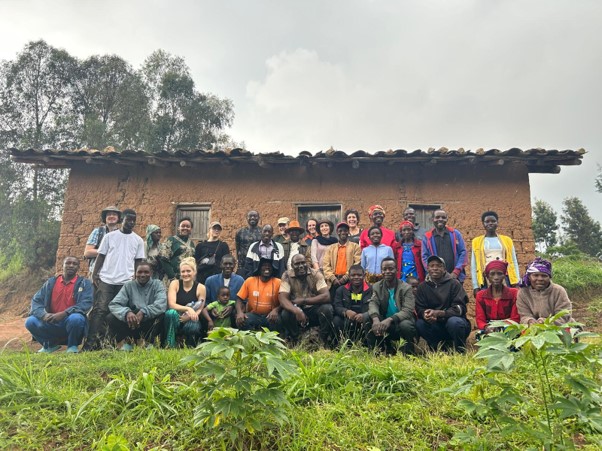
Who is behind the team? There are around 50 transdisciplinary stakeholders from across sectors working together in two different roundtables, each of which is based on two governance models, each representing a distinct restoration community of practice. One group is NGO-driven, uniting representative restoration actors from government, NGOs, academia and the private sector. The other one is almost entirely farmer-driven: local farmers, who are also traditional healers, beekeepers, teachers or carpenters, alongside community leaders and local extension officers.
The communities have been involved in regular workshop sessions in which members first started by establishing codes of conduct, strategies on how to communicate, expectations and potential contributions. What’s especially interesting for us now is what happened in the last workshops in February this year.
Setting the scene: The grand selection of tree species
In February, each group had a workshop in which they co-designed the restoration experiments by ranking and prioritizing the native and exotic trees species suitable for the area for the restoration experiments. As a result, both governance models now have a list of prioritized tree species. These species are around 80 % native and 20 % exotic, which is quite radically different compared to the fact, that so far, most trees planted in western Rwanda are not native, which leads to loss of biodiversity and ecosystem services and depauperate landscapes (Nyiramvuyekure et al. 2026).
Interestingly, the two groups did the same workshops in parallel, but came up with a slightly different list of tree species they want to plant. Each governance model is assigned to a specific region with living lab sites having been selected for doing the restoration experiments – including the tree planting.
Let us walk you through the workshop day by day
William Apollinaire, Vicky Temperton and (for one day) Stefan Sieber attended the workshops, as scientists and principle investigators of the Rwanda research project.
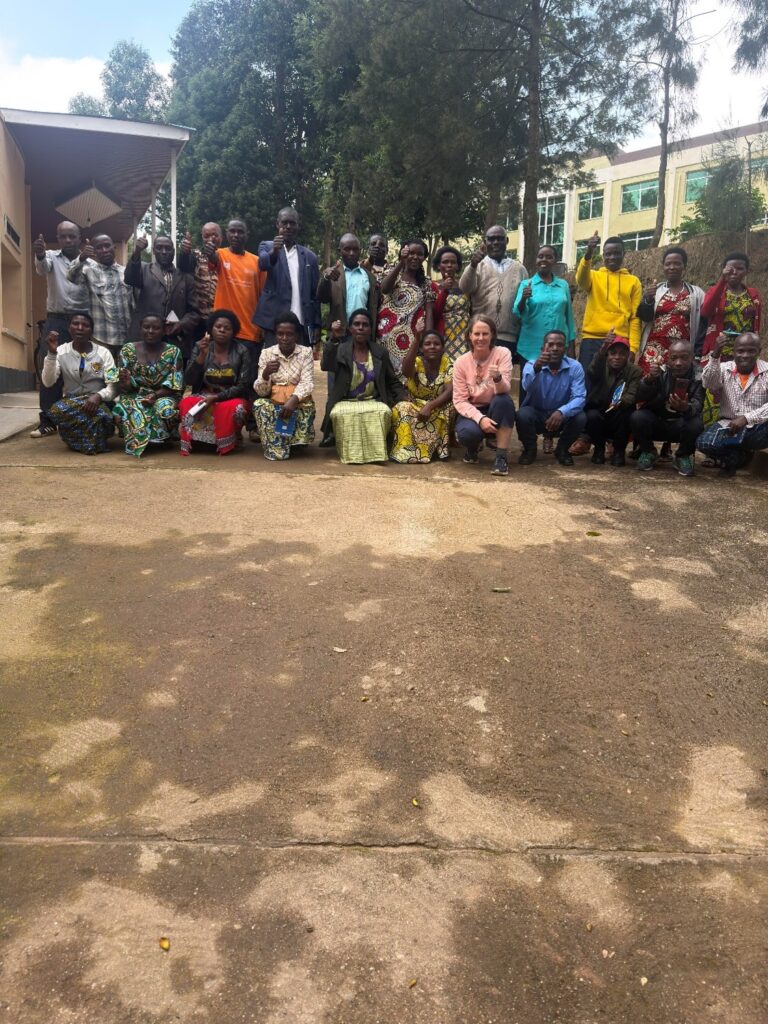
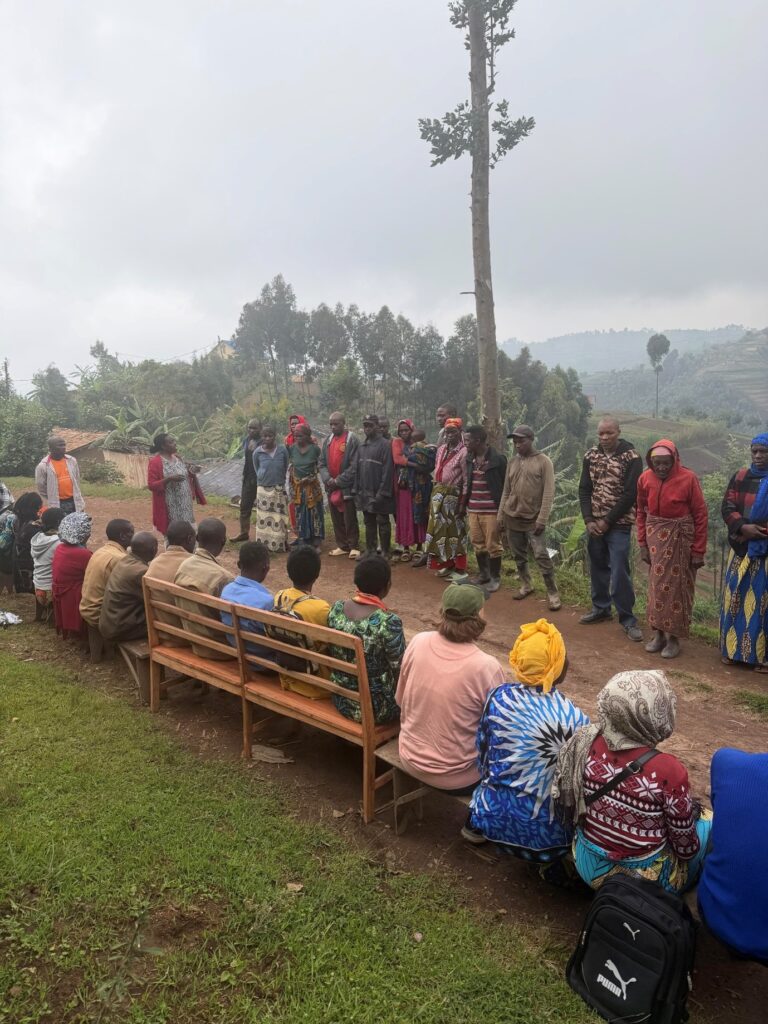
The first day of the workshop – held on separate dates for each governance model – took place in a conference room. This was where the magic of selecting and prioritizing the tree species happened based on the values stakeholders assigned to each species. The values ranged from ecological to socioeconomic criteria, survival rates, availability of planting material and compatibility with the most commonly grown crops in western Rwanda. At the end, the ranked list of tree species the groups want to plant saw the light of day.
Enjoy the following impressions of how the first day looked like for both governance models:
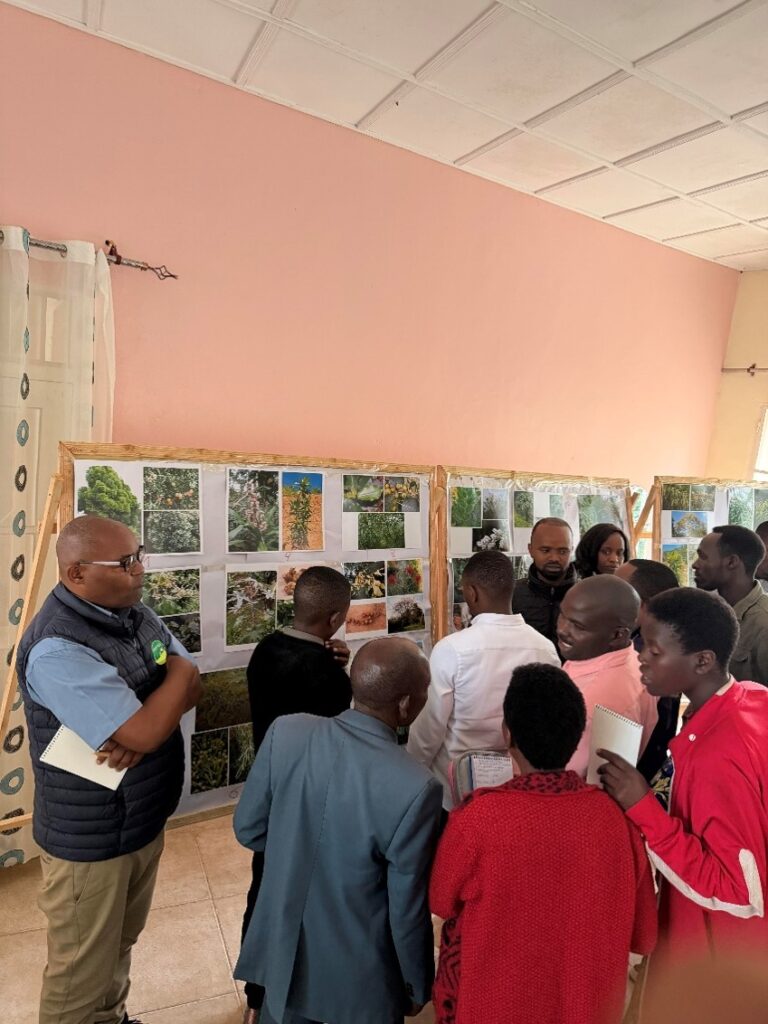
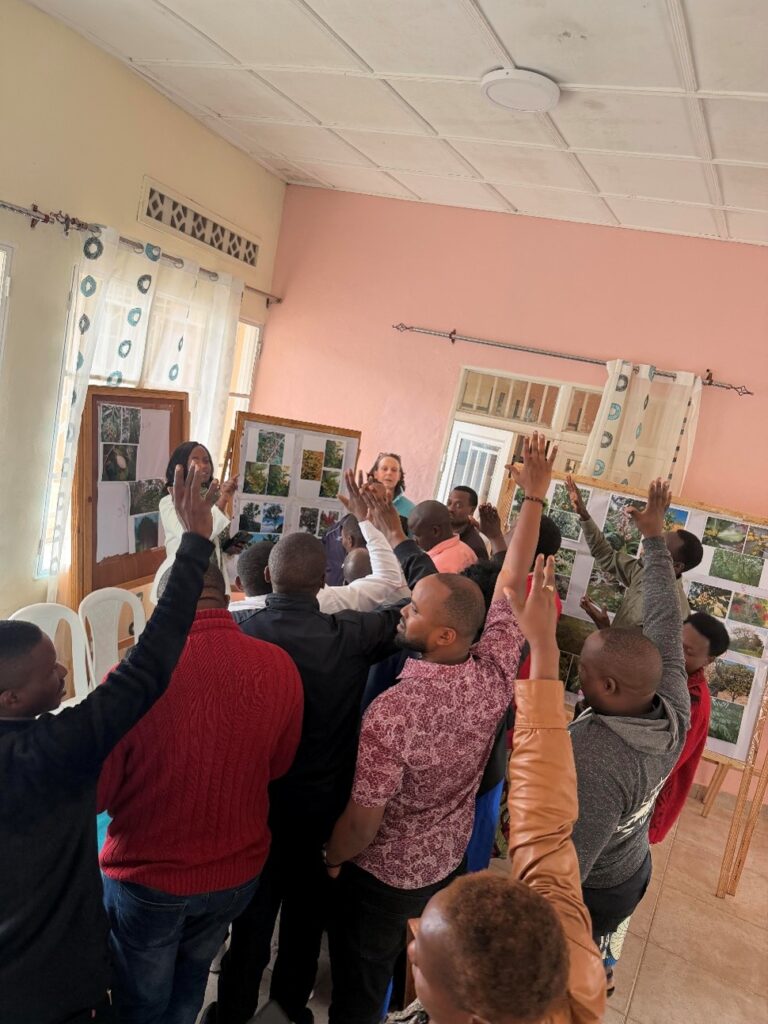
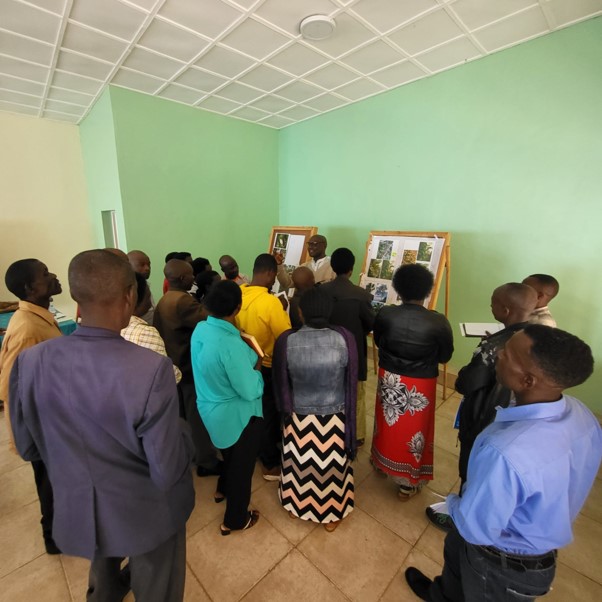
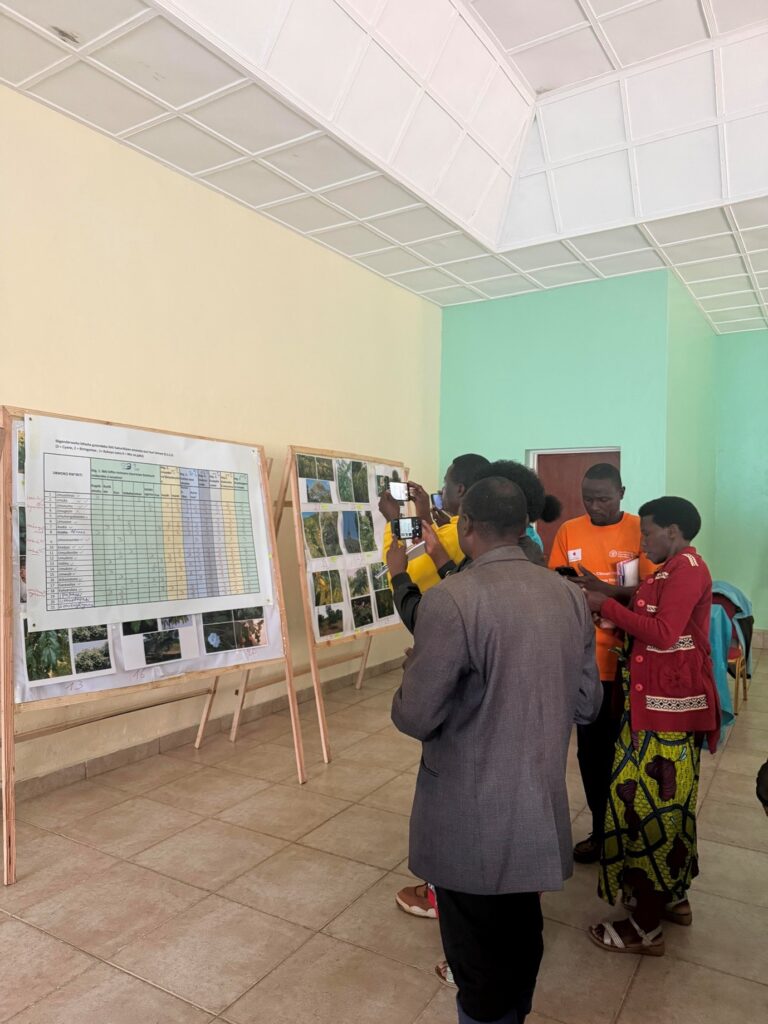
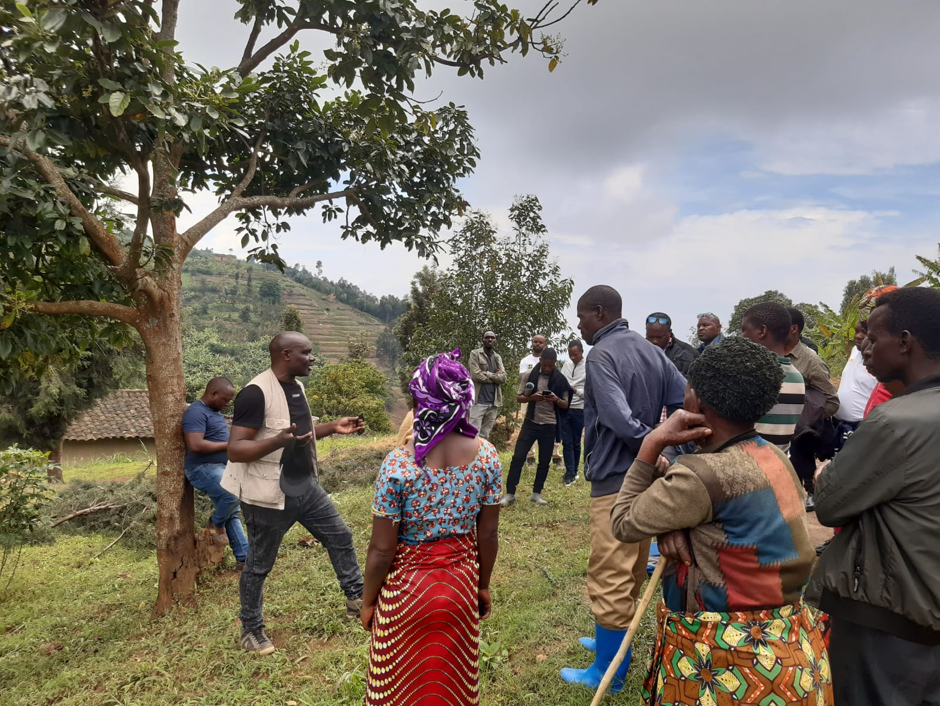
The next day, the groups got into action out in the field. They went out to their living lab sites and met with the local landowners of the land where the trees are going to be planted, including meeting up with scientists involved in the research project, some of whom were visiting the living lab to connect to this aspect of the overall research project.
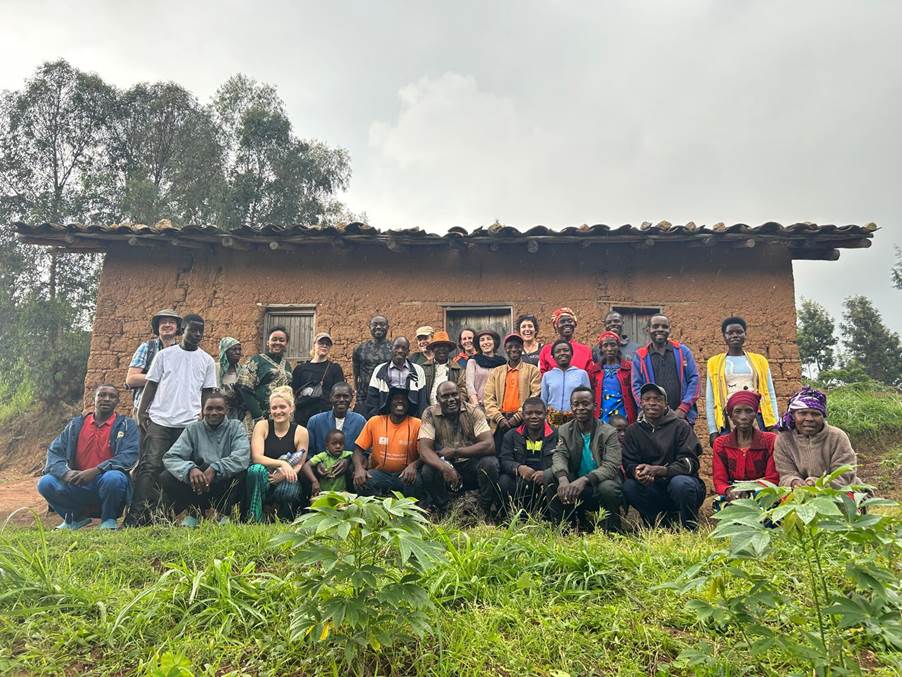
These field meetings were crucial, first for the communities to connect to the scientists but also to agree with landowners on the selected species as well as the proportion of native and exotic species to be used in the living lab experiments. After some comments, suggestions and adjustments, a final agreement was reached. And there it was – the blueprint of the living lab experiments, co-created between local stakeholders and scientists!
Impressions of the second day out in the fields:
What made these workshops special
“I can see the momentum!” – Dr. William Apollinaire
Not only was this trip key in determining the ongoing process of the restoration experiments, but it was also, and maybe even first and foremost, very valuable in terms of interpersonal exchange. When you hear Dr. William Apollinaire, the Postdoc researcher and coordinator of the living lab research in western Rwanda, speaking about his highlights of the workshops in February, it soon becomes clear that the workshops as well as the whole process mean a lot to everyone who is involved in the living lab. The true jewel was seeing how much the stakeholders are engaged. The participatory process, the involvement and empowerment of the people. Moments like spontaneously singing and dancing together, enjoying and exchanging cultural aspects. All of this leads to a successful co-creation. According to Dr. William Apollinaire, the stakeholders are fully engaged and eager to see the outcome of the living lab. “It was interesting to see how, if people are empowered enough, they can engage actively in the collaborative or participatory process.”
But how do you get to this point of engagement?
“Bringing people together with other stakeholders and sharing the same meal, the same treatment.” – Dr. William Apollinaire
It wasn’t difficult to get people on board and sustain their engagement long-term, as the initiators of the living lab selected people for the roundtable who have already been involved in restoration activities. The key, however, is to value everyone who is part of the process. To value everyone’s voice. This way, an empowering environment was created in which every stakeholder could feel respected. Part of this is also organizing the logistics to make sure that everyone is involved, for instance, by facilitating communication. Understanding everyone’s expectations and goals. Every stakeholder being part of the design as well as the planning and implementation process: That is how co-creation works. That is how this momentum of engagement came to life.
What’s in store for the future
Now you know what’s currently going on in the living lab, but we certainly don’t want to withhold the exciting next steps that are coming up our way. Right at this moment, the trees, which the two governance models have decided on, are developing in a nursery of local restoration stakeholders. They are growing and waiting to be planted in October this year, but before the planting happens, the farmers will learn how to prepare the land for the planting in September. The kick-off of the planting campaign in October will be a big event where the trees will go into the ground and we’re going to hear different speeches from people from the government and local communities. Excitingly, the national media is going to be invited to cover the event and who knows, maybe you might even read an article about it on this blog, so stay tuned!
While the trees are growing
In the meantime, the stakeholders will, together with the scientists, define socio-ecological indicators of success to be measured during the experiments and how those are going to be monitored. Examples of these indicators of success might be improving the nutrition of local communities as well as reducing medical costs. Ecosystem restoration is not just about the trees but also about shrubs and other plants that are incorporated alongside them, with nutritional and medicinal value. Species that have these values and are going to be planted include, for instance, Albizia gummifera, Carapa grandiflora, Vernonia amygdalina, Milletia dura, Ricinus communis, passion fruit, local papaya, avocado, lemon, myrianthus, and chayote.
“Everyone is excited about the book” – Dr. William Apollinaire
Attention! The initiators of the living lab are also writing a book about agroforestry trees in Western Rwanda and their many benefits and uses. It will highlight especially native species and their potential but also include non-native species which are still useful for ecosystem restoration. Watch this space in the future for more information on the book. The aim in publishing this book is to contribute to connecting local people and NGOs to the wide array of, especially native trees they have in at their disposal.
What happens after the planting?
Don’t forget that the planting of around 80 % native species in the experiments is very different to the usual non-native tree planting in Western Rwanda. Therefore, it will be very interesting to see the outcome of the experiments. After some time, the two governance models will be compared, and the stakeholders will continue to be engaged by learning how to monitor the sites. The overarching goal is for the communities to have full ownership of the restoration in the end and that they keep monitoring it themselves in the future.
There’s one last thing we want to give you to take with you on your way
Let’s go back to this sentence you already read at the beginning:
“If you want to go fast – go alone. If you want to go far – go together.”
As you probably noticed from this article, the co-creation of ecosystem restoration is, most importantly, a joint learning process. This might take a long time. But it will be most definitely worth it! Only by including everyone involved, designing and walking the path together, will the outcome match what everyone envisioned. Or, to say it in the words of Dr. William Apollinare: “That is how we achieve success in scaling up and upgrading the restoration experiments from research to practice!”.
Thank you for reading and hopefully, you’ll be back for the next update of the living lab in Rutsiro!
If we’ve now caught your interest on ecosystem restoration in general and in Western Rwanda, we highly recommend you this article of the Social-ecological Systems Institute of Leuphana about the five critical frontiers for science and practice of ecosystem restoration in East African landscapes: From Local Knowledge to Restoration Practice: Five Critical Frontiers for East African Landscapes | Ideas for Sustainability. It references a research paper recently published by the living lab’s research team.
Literature:
Nyiramvuyekure, V., Fischer, J., Kaplin, B. A., Mukuralinda, A., & Temperton, V. M. (2026). Woody vegetation diversity remains low after extensive forest landscape restoration efforts in a western Rwandan landscape. Biological Conservation, 317, 111812. https://doi.org/10.1016/j.biocon.2026.111812
If you don’t want to miss any new articles of this blog, then scroll all the way to the end of this site, where you’ll find a subscription tool. Subscribe if you’d like to receive email notifications when there’s a new article posted.