In spring 2026, it came out – the fully revised new edition of the identification key for wild bees and wasps in nesting aids, published by the Johann Heinrich von Thünen Institute in Braunschweig. One of the lead authors is Swantje Grabener, a research assistant at the Institute of Ecology at Leuphana University in the Animal Ecology research group. The guide focuses on identifying cavity-dwelling wild bees and wasps – which can be found in artificial nesting aids – as well as their natural predators. Find out in this article why these insects, and their identification and documentation, are so important!
A wake-up call for the protection of insects
Autumn 2017. The so-called ‘Krefeld Study’ is published, and as a result something happens that no previous comparable study or Red List of threatened species has ever brought about: the issue of ‘insect decline’ captures the public’s attention and sparks a renewed commitment to protecting insects and their habitats. However, this comes in the wake of some bad news: as of 2017, the biomass of flying insects in certain nature reserves had declined by more than 75 per cent over the preceding 27 years. This grim news sets a number of developments in motion. You may have already heard about the successful referendum in Bavaria on biodiversity. This was followed by similar initiatives in other federal states, and monitoring programmes were launched to track long-term trends, investigate the causes of insect decline and develop effective measures. A national monitoring centre and an Insect Protection Act have even been established.
Insect monitoring: not just for researchers
Even amongst the general public, enthusiasm for insect conservation has grown, and citizen science-based projects have gained popularity. Through these projects, anyone – whether an insect expert or simply a nature lover – can collect data and help to expand our knowledge of the distribution and abundance of insects. Even the famous Krefeld study was compiled using the results of years of citizen science. Identification guides, such as those for wild bees and wasps in nesting aids, play a crucial role in this, but more on that later.
Why are wild bees and wasps so important?
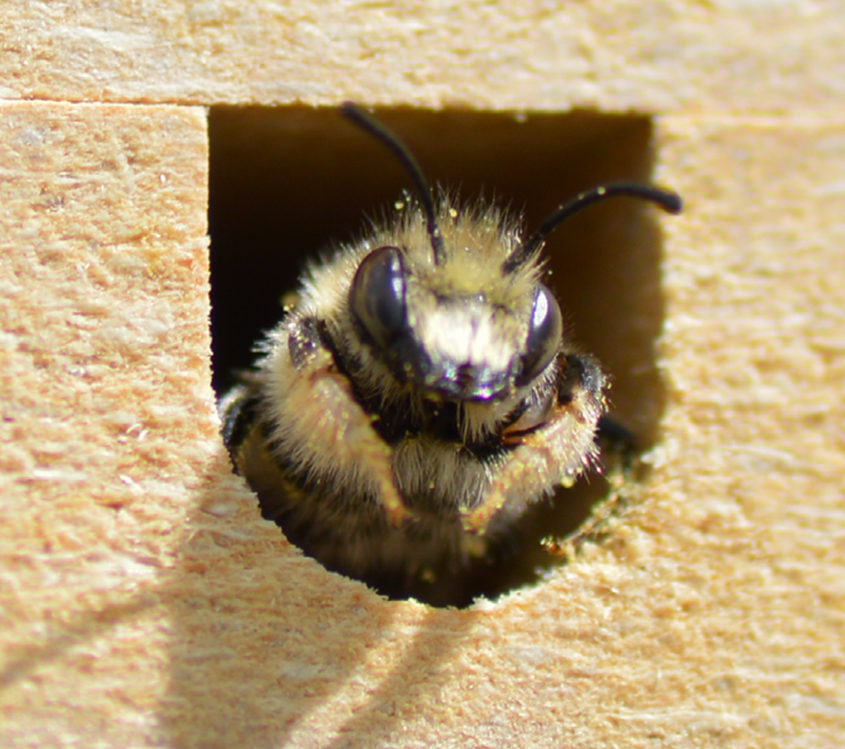
The protagonists of this identification guide also play a key role, as they fulfil vital ecosystem functions – such as pollination and pest control – and are therefore essential for maintaining stable ecosystems. Let’s first take a closer look at the more than 600 species of wild bees in Germany. Many of them act as vital pollinators in their habitats. But that’s not ‘all’! At the same time, they make a significant contribution to ensuring we have a varied diet, as over 70 per cent of all crop species rely either partly or entirely on pollination by insects. In practical terms, this means that if there were no more insects, we would, for example, have significantly lower yields of our strawberries, cherries, pumpkins and tomatoes in this country.
The introduction to the identification key explains:
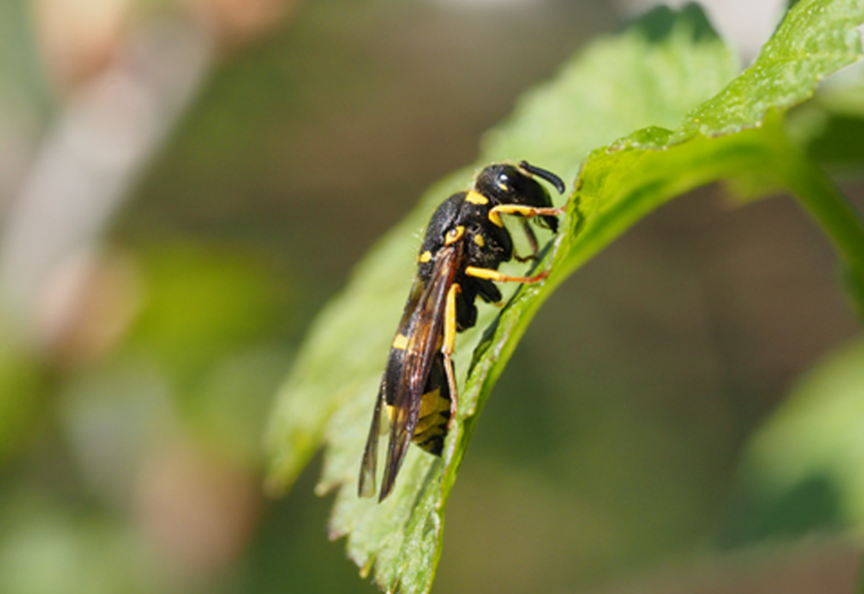
“While wild bees, as furry pollinators, are widely admired in society, many people often associate the term ‘wasps’ with unwelcome guests who become a nuisance whilst we’re eating cake in late summer. But if we look beyond our own plate, we see that stinger-bearing (aculeate) wasps are valuable natural pest controllers. This is because, depending on the species, wasp larvae are fed on beetle larvae, butterfly caterpillars or aphids, for example.”
The latest Red List of threatened species highlights just how important it is to protect these animals. According to the list, around half of all bee species and 46 per cent of the 630 stinging wasp species in Germany are considered endangered, if not already extinct. At the same time, the data available is patchy. This makes it all the more important to raise public awareness of the taxonomic expertise relating to these species. Yet this expertise is currently lacking amongst the general public.
It’s not just insects that are lacking these days…
… but also to the people who can identify them. This is demonstrated by the European Red List of insect taxonomists. Yet the conservation of biodiversity absolutely requires many people who are knowledgeable about the species – who can identify them scientifically and accurately, understand their phylogenetic relationships and ecological roles, and are able to assess their conservation status. In recent decades, not only has the number of species declined, but so too has the number of taxonomists, meaning that their expertise is now concentrated in the hands of a few individuals. The Red List of Insect Taxonomists is a call to all experts to share their knowledge of species with the wider community, as well as a call to the general public to recognise the importance of taxonomy and to ensure its long-term survival. This is precisely where identification guides come in!
And that brings us back to our guide to identifying wild bees and wasps in nesting aids.
How the identification guide guides
First and foremost, it helps us to make biodiversity visible. Whilst many people are already aware of the importance of wild bees and wasps, many species remain invisible to the untrained eye. The key word here is ‘still’, because the identification guide brings these species out of hiding and gives you more practice in recognising and identifying them.
It is not only wild bees and wasps that play a central role in these small ecosystems. Their antagonists – natural predators such as cuckoo wasps and fruit flies – are also vital for maintaining the ecological balance. That is why the guide also highlights them, thereby providing the user with a complete picture of what is happening inside the nesting aids.
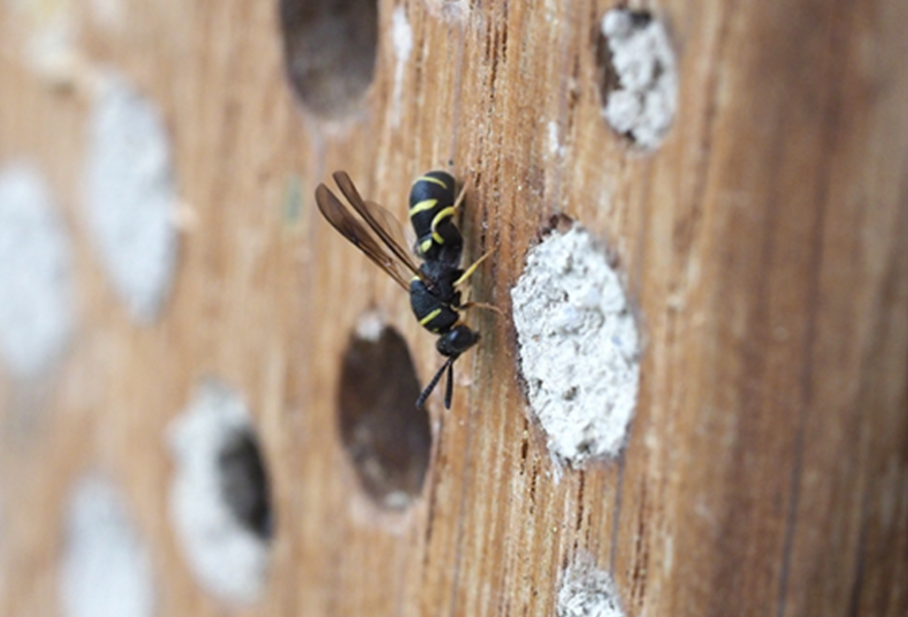
Speaking of nesting aids!
Why insects – and therefore we too – need them was probably made clear right at the start of this article: highly specialised species, such as wasps and wild bees, are in sharp decline.
But why is that, exactly?
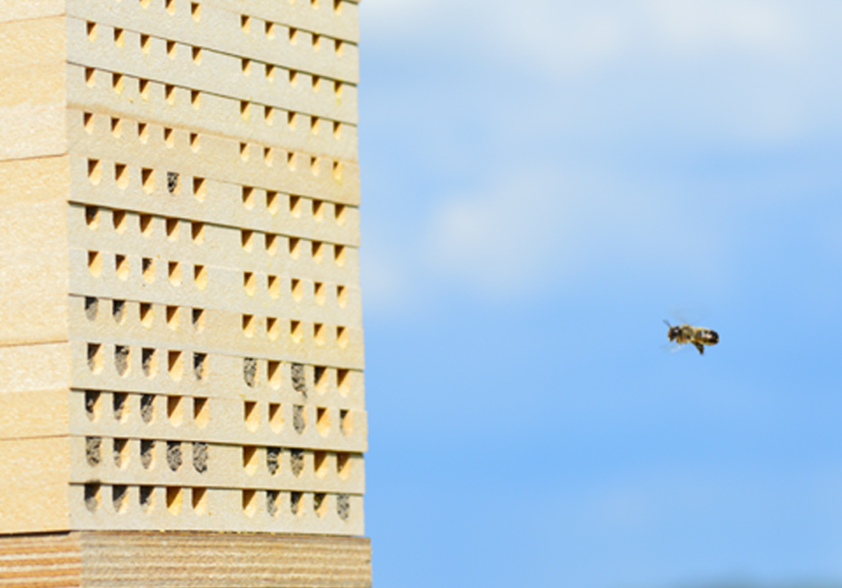
Our landscapes were once adorned by a diverse mosaic of pastures, meadows, arable land and fallow fields, dotted with hedgerows and copses – perfect nesting conditions for the group of aculeata, to which wild bees and wasps belong. Yet today, the landscape often looks very different. Monotonous landscapes stretch as far as the eye can see, where intensive land use and fragmentation, chemical fertilisers and intensive animal and plant breeding have caused key elements for biodiversity to disappear. This includes nesting opportunities. That is why nesting aids offer a whole host of benefits. Not only are they a valuable tool for research, monitoring and environmental education, but they are also used as breeding habitats by around 8 per cent of the wild bees native to Germany and as many as 19 per cent of wasp species! Thus, nesting aids – including the identification guides that accompany them – make an important contribution to the conservation of these small creatures and to a better understanding of their diversity, food resources and trophic interactions.
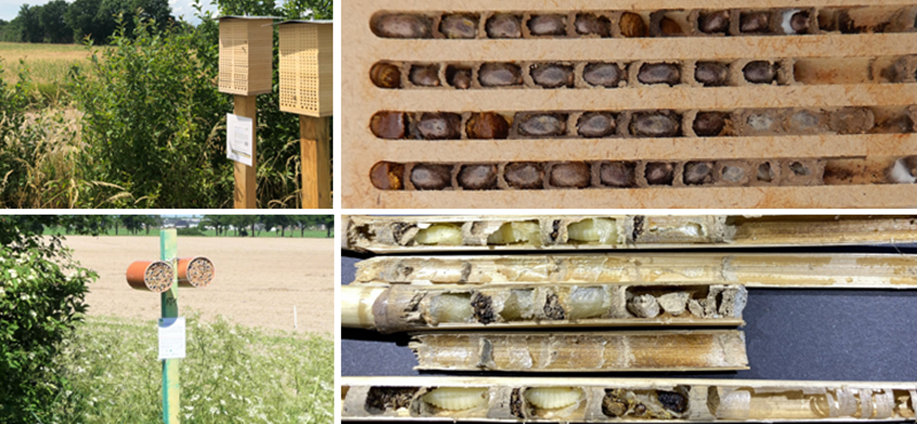
And here’s how you can contribute as well:
- Download the identification guide here (but note that it’s only available in German).
- Take it with you to the nearest nesting box in your garden or elsewhere and check it there.
- Very important: share your findings! Many nature conservation initiatives collect observation data, and the insights you gain from identifying species can contribute to local species lists and conservation measures. The fact that this guide is partly the result of the ‘Nesting Aid Sponsorship’ citizen science project highlights just how important the involvement of volunteers is.
More than a specialist book
Ultimately, this guide is not only a key to identification, but also your key to the fascinating world of wild bees, wasps and their natural enemies. Whether you’re a beginner or an experienced observer of nesting aids, this guide will help you discover the biodiversity of these important insects in your local area, understand them better and, last but not least, contribute to their protection. The more people who immerse themselves in this world, the shorter the Red List of insect taxonomists will become. So: head out into the countryside and have fun getting to know and protecting Germany’s cavity-nesting wild bees and wasps!
If you don’t want to miss any new articles of this blog, then scroll all the way to the end of this site, where you’ll find a subscription tool. Subscribe if you’d like to receive email notifications when there’s a new article posted.
Citation:
Grabener, S*., Lindermann, L*., Schiele, S*., Bendixen, L., Fornoff, F., Hopfenmüller, S., Stahl, J., Dieker, P. (2025) Wildbienen und Wespen in Nisthilfen bestimmen: ein Bestimmungsschlüssel für Deutschland. 2., vollst. überarb. Neuaufl. Thünen Ratgeber 10. Johann Heinrich von Thünen-Institut, Braunschweig. https://doi. org/10.3220/253-2025 168
*Lead authors
All the photos are taken from the identification guide; the photographers are listed on the last page.